Layered Construction That Resists Moisture Movement
Engineered Hardwood Flooring in Greenwich for installations over concrete slabs or in spaces with variable humidity
Solid hardwood moves too much in coastal climates like Greenwich where summer humidity rises near Long Island Sound and winter heating dries indoor air, causing expansion gaps to open between boards during cold months and compression buckling during humid seasons. Engineered hardwood solves this problem through cross-layered construction where a real wood veneer bonds to plywood or high-density fiberboard cores with grain directions alternating ninety degrees between layers. MP Hardwood Flooring INC installs engineered hardwood floors that maintain stability across humidity swings while delivering the authentic wood appearance you want, particularly in basements, kitchens, and ground-level spaces where concrete slabs prohibit solid wood installation.
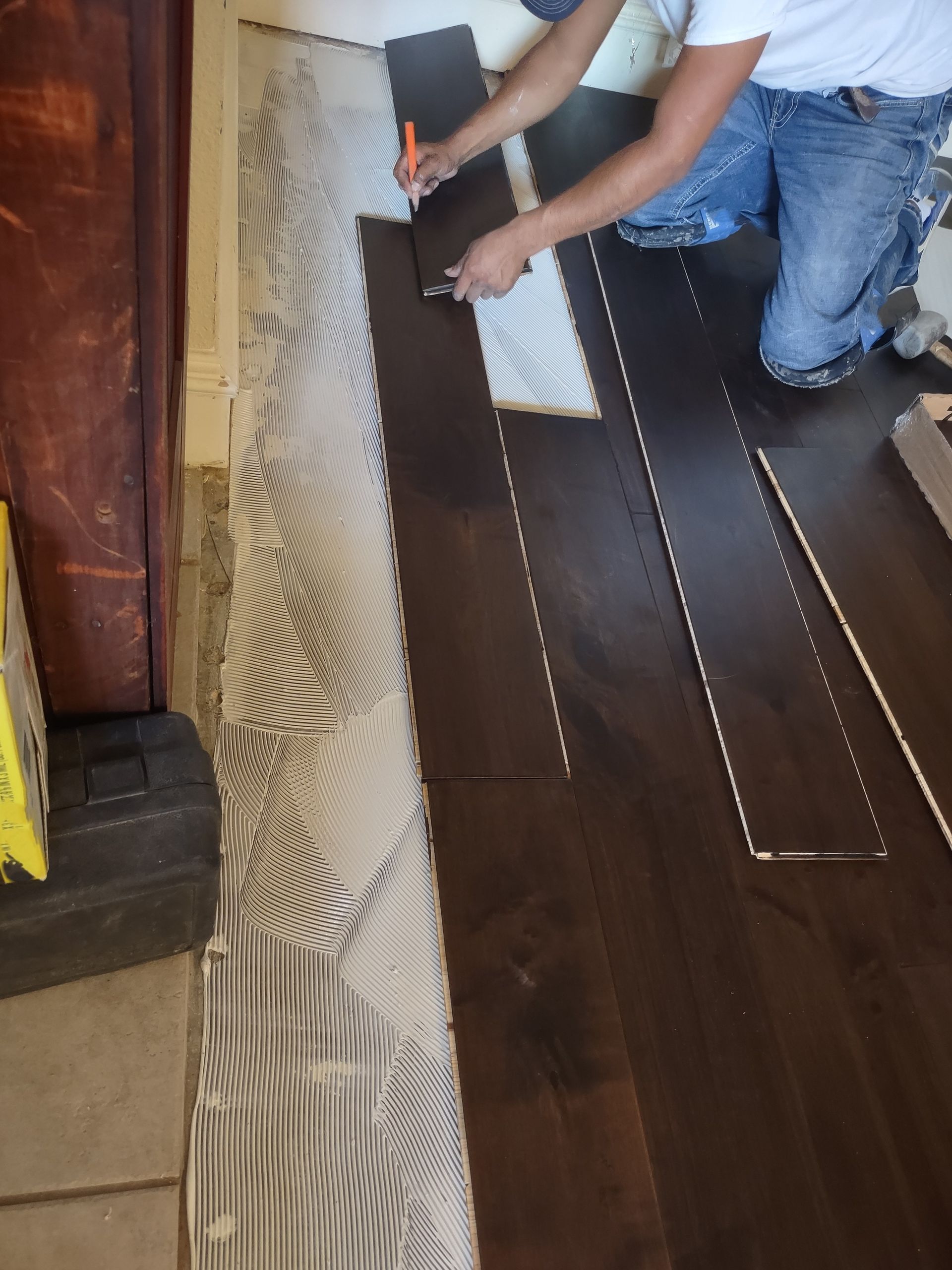
Installation happens through glue-down methods that bond planks directly to concrete or wood substrates, or floating systems where planks click together and rest over underlayment without fasteners. Wide plank formats—seven inches and wider—create contemporary looks with fewer seam lines across the floor, and thicker wear layers on premium products allow for future refinishing if scratches accumulate over years of use.
Arrange a consultation to discuss wear layer thickness and plank widths that work with your room dimensions and design goals.
Why Layered Construction Works for Challenging Spaces
The cross-ply core construction limits dimensional movement to less than half what solid wood experiences under identical humidity changes, which means expansion gaps around room perimeters can be smaller and seasonal gapping between boards stays minimal. Wear layer thickness determines long-term performance, with two-millimeter veneers allowing one light refinishing and four-millimeter or thicker layers tolerating multiple sandings like solid hardwood. Glue-down installations work over radiant heat systems because the adhesive contact improves thermal transfer to the floor surface compared to floating installations with insulating underlayment underneath.
After installation completes, the floor looks identical to solid hardwood with the same wood species grain patterns and finish options, but remains flatter across seasons because the engineered structure resists cupping and crowning. You notice the planks don't develop the wide gaps that solid floors sometimes show during winter months, and the floor feels stable without hollow sounds when walking across glued-down installations. Contemporary finishes include wire-brushed textures that emphasize grain lines and matte or low-sheen coatings that hide scratches better than high-gloss polyurethane.
Floating installations require expansion space around all fixed vertical surfaces, which gets concealed under baseboards and transition strips, while glue-down methods need clean, level substrates free from moisture issues that could compromise adhesive bonds. High-performance systems include integrated underlayment or cork backing that reduces sound transmission through the floor, which matters in upstairs installations above living spaces.
Questions Before Starting Your Project
Material selection and installation methods depend on your subfloor type and the room's humidity exposure patterns.
What differentiates engineered hardwood from luxury vinyl plank that also resists moisture?
Engineered hardwood uses real wood veneer over a dimensional-stable core, so it looks and feels like solid wood but moves less, while LVP is entirely synthetic with printed wood patterns and offers complete waterproofing that engineered wood doesn't provide.
How thick should the wear layer be for floors that might need refinishing eventually?
Wear layers of three millimeters or more allow for at least one full refinishing with room for future spot repairs, while thinner veneers under two millimeters should be treated as non-refinishable and replaced when surface damage becomes extensive.
Can engineered hardwood be installed in full bathrooms or laundry rooms?
Engineered construction handles moisture better than solid wood but isn't waterproof, so it works in powder rooms or areas with occasional minor spills, but standing water or high-moisture environments like full baths still risk veneer delamination and core swelling.
What installation method works better over concrete slabs in Greenwich?
Glue-down systems provide better moisture protection because adhesive creates a vapor barrier that slows dampness transmission from the slab, though floating installations with separate moisture barriers work adequately if the concrete has been tested and shows acceptable moisture vapor emission rates.
How do wide plank formats affect installation and long-term performance?
Wider planks require flatter substrates because any dips or humps become more noticeable across the broader surface, and the cross-ply construction becomes even more important since wider solid planks would cup or crown more dramatically with moisture changes.
MP Hardwood Flooring INC installs engineered hardwood floors throughout Greenwich with attention to moisture control and installation techniques that maximize the product's dimensional stability advantages. Request an estimate to review wear layer options and installation methods suited to your specific subfloor conditions.