Waterproof Surfaces That Look Like Wood
Luxury Vinyl Plank (LVP) Flooring Installation in Greenwich for spaces where moisture exposure makes hardwood impractical
Basements, mudrooms, and bathrooms require flooring that won't swell or warp when water sits on the surface, which eliminates solid hardwood from consideration even though you prefer the wood appearance. Luxury vinyl plank flooring replicates wood grain patterns and plank dimensions while using a completely waterproof construction that handles spills, pet accidents, and the humidity fluctuations that occur in below-grade spaces. MP Hardwood Flooring INC installs LVP systems in Greenwich properties where durability and water resistance outweigh the authenticity of real wood, particularly in rental units, commercial spaces with public access, or homes with active families and pets.
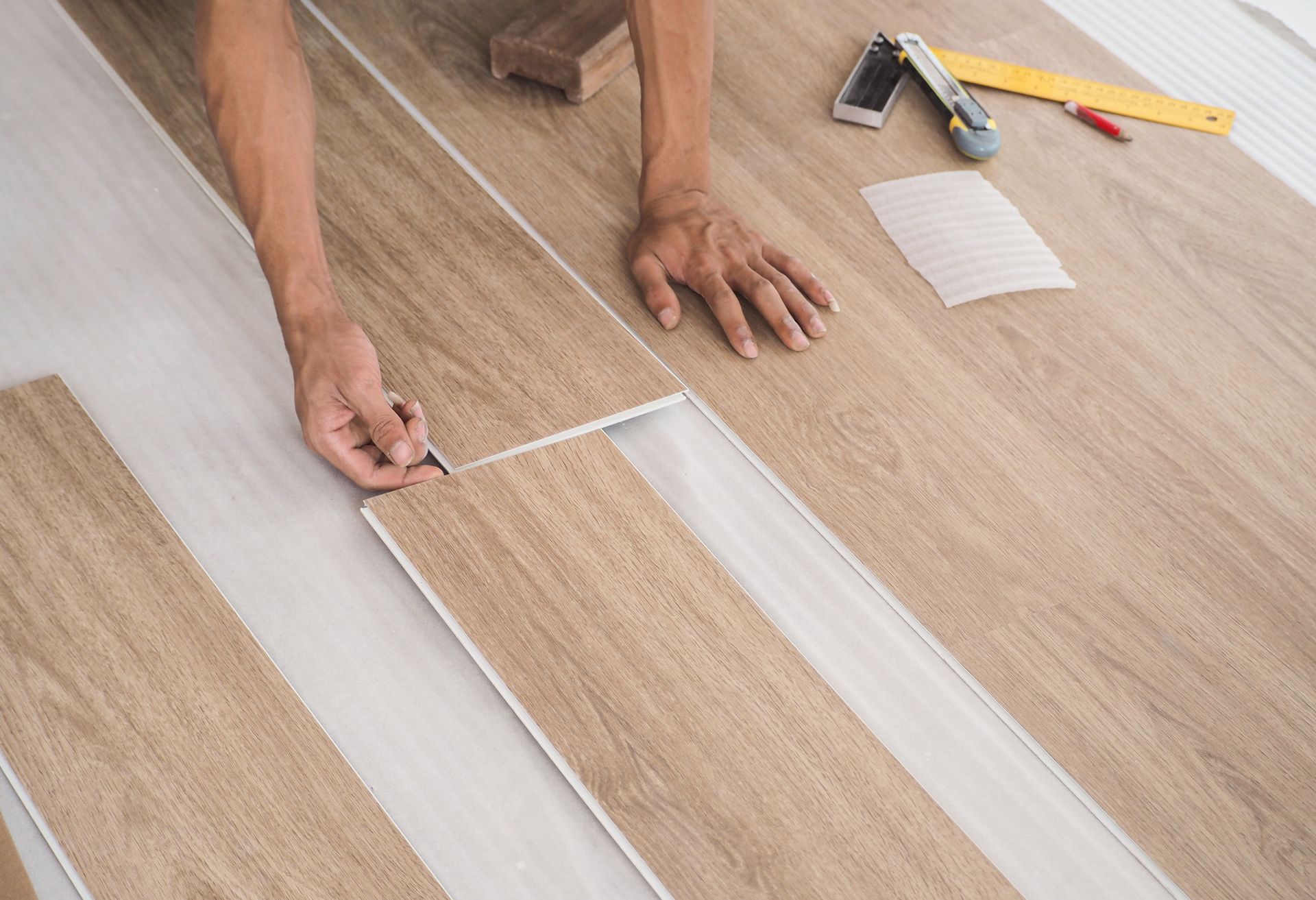
Installation methods include floating floors that click together over underlayment without adhesive, and glue-down systems that bond directly to the subfloor for commercial applications where heavy rolling loads require extra stability. The subfloor must be level within three-sixteenths of an inch over a ten-foot span because vinyl planks telegraph any irregularities in the substrate below, showing humps or dips that weren't visible with the previous flooring.
Request a consultation to evaluate subfloor flatness and review wood-look styles that match your design preferences.
What You Notice Once Installation Completes
Contemporary LVP products use high-resolution photography and embossing techniques that align texture with the printed grain pattern, creating a tactile surface that feels like wood when you walk across it barefoot. Wear layer thickness—measured in mils—determines scratch resistance, with twenty-mil products handling residential traffic and thirty-mil or higher ratings suited for commercial use where chairs, carts, and foot traffic concentrate in specific pathways. Rigid core constructions using stone polymer composite remain dimensionally stable even in spaces without climate control, unlike earlier vinyl products that expanded and contracted enough to cause buckling.
After installation, the floor looks like wide-plank hardwood with varied plank lengths and realistic color variation between pieces, but water beads on the surface instead of soaking in. Spills wipe up without leaving stains or causing the planks to swell at the edges, and the floor feels slightly softer underfoot than hardwood because the vinyl construction has more give. Transitions to tile or carpet use matching trim profiles in the same finish as the field flooring, maintaining the wood-look appearance even at doorways.
The installation includes removing existing flooring if needed and applying floor patch compound to smooth substrates, but does not include subfloor structural repairs or mold remediation if moisture damage exists underneath. Floating installations require expansion gaps around the perimeter that get covered by baseboards or quarter-round, while glue-down methods eliminate the hollow sound that sometimes occurs with floating floors in large open areas.
Answers to Frequent Service Questions
Material selection and installation details vary based on whether the space is residential or commercial and what subfloor exists.
What makes LVP different from laminate flooring that also looks like wood?
Luxury vinyl plank uses a solid vinyl construction that's completely waterproof through the entire thickness, while laminate has a wood fiber core that swells and delaminates if water penetrates the seams, making LVP the better choice for moisture-prone areas.
How do floating and glue-down installation methods compare for residential use?
Floating floors install faster and allow for easier future removal or repair of individual planks, but glue-down systems feel more solid underfoot and work better over radiant heating because the adhesive contact improves heat transfer to the surface.
Can LVP be installed over existing vinyl or tile floors?
Existing hard surfaces work as substrates if they're smooth, level, and well-bonded to the subfloor underneath, though any texture or embossing in the old floor will telegraph through thin LVP products and become visible over time.
What underlayment works best beneath floating LVP installations in Greenwich?
Dense foam or cork underlayment with moisture barrier backing helps in spaces where concrete slabs might transmit dampness, and acoustic underlayment reduces hollow sounds in upstairs installations where noise transmission to rooms below matters.
How does LVP handle temperature changes in spaces without consistent heating?
Rigid core LVP remains stable across temperature swings from freezing to ninety degrees, making it practical for three-season rooms, unheated garages, or vacation properties where climate control runs intermittently.
MP Hardwood Flooring INC installs waterproof vinyl plank systems for Greenwich property owners who need the appearance of hardwood with better moisture resistance. Schedule an estimate to review product options and installation methods suited to your space.