Restoring Floors Without Replacing Them
Wood Floor Refinishing in Greenwich for surfaces with visible wear, scratches, or outdated stain colors
Hardwood floors show their age through scratches that catch light, worn traffic patterns where the finish has abraded away, and stain colors that no longer match your interior. MP Hardwood Flooring INC refinishes wood floors in Greenwich by sanding away the damaged surface layer and applying new protective coatings that restore the appearance without the cost of full replacement. The process works for solid hardwood floors that have enough thickness remaining above the tongue-and-groove joint—typically at least three-sixteenths of an inch—and for some thicker engineered floors with substantial wear layers.
Refinishing starts with coarse-grit sanding to remove the old finish and level out scratches or dents that penetrate into the wood itself, then progresses through finer grits until the surface feels smooth and even. Dust-minimized equipment captures most airborne particles during sanding, though fine dust still settles on surfaces in adjacent rooms despite containment barriers. Stain application happens after final sanding if you want to change the wood color, and the new finish—polyurethane, oil-modified poly, or hardwax oil—goes on in multiple coats with drying time between each layer.
Arrange an on-site evaluation to determine remaining wood thickness and discuss stain options that work with your existing species.
How Refinishing Addresses Surface Damage
The sanding process removes between one-sixteenth and one-eighth inch of wood depending on how deep the scratches or cupping extend, which means most solid hardwood floors tolerate three to five refinishing cycles over their lifespan before the wood becomes too thin. Drum sanders handle the main floor area efficiently but require skill to avoid creating waves or dips, while edging machines reach the perimeter spaces where the drum can't fit. Corner areas and closet floors sometimes need hand-scraping because power equipment can't maneuver into tight angles without damaging walls.
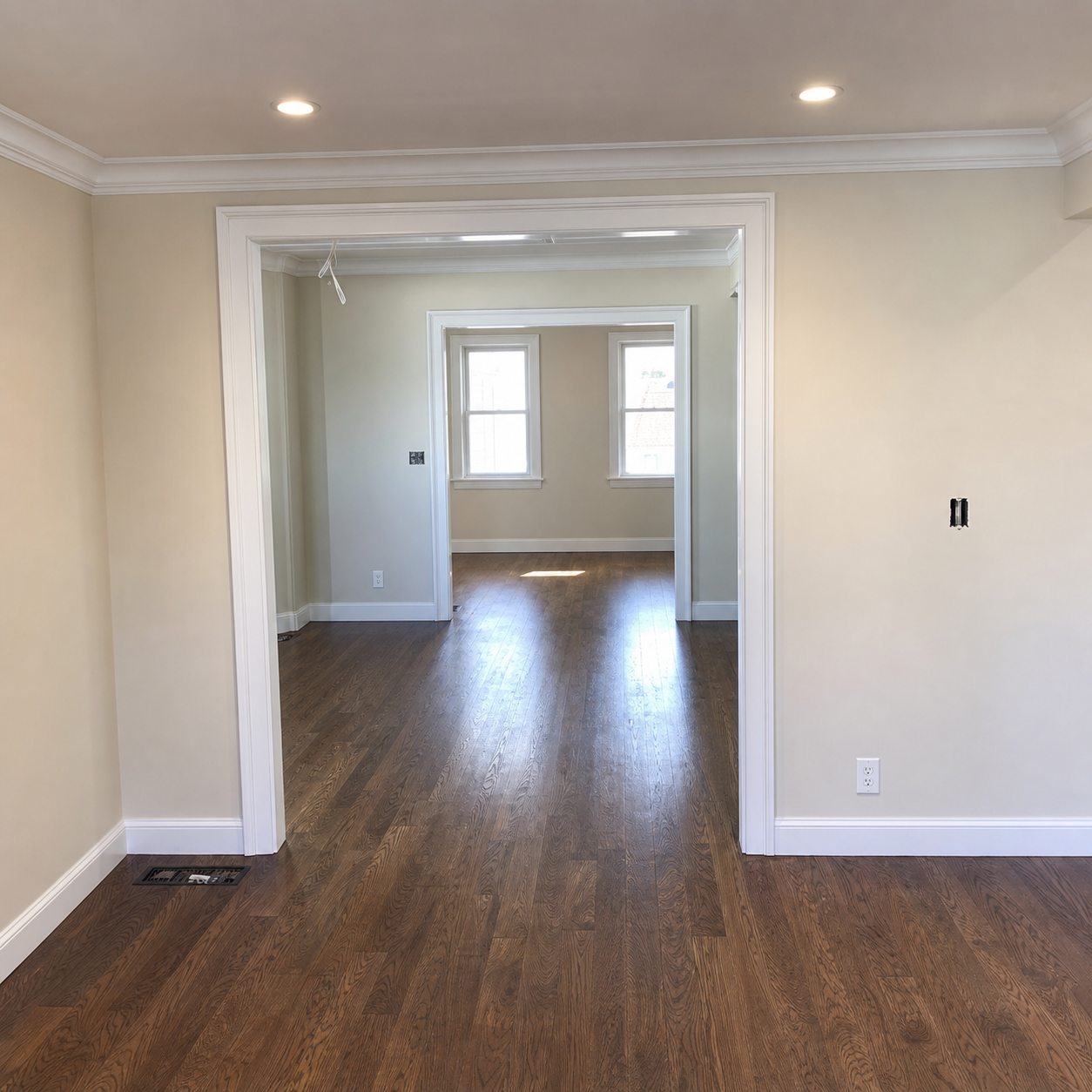
After refinishing completes, you notice the floor reflects light evenly without dull patches where finish wore through, and the wood grain appears consistent across the entire surface. Scratches that were visible before disappear unless they penetrated deeper than the sanding removed, and the new finish provides a uniform sheen level—matte, satin, or gloss—across all boards. High-traffic areas that looked darker from ground-in dirt now match the rest of the floor because the stain and finish application started from bare wood.
Historic floor restoration involves additional steps such as replacing isolated damaged boards to match surrounding wood, filling wide gaps between planks with strips of matching species, or using wood filler tinted to blend with the final stain color. The service does not include moving heavy furniture or removing baseboards, though quarter-round trim typically gets pulled and reinstalled to allow sanding equipment to reach the floor edges.
Common Questions About This Service
Refinishing decisions depend on your floor's current condition and what changes you want in appearance.
How long does the refinishing process take from start to finish?
Most residential floors require three to five days including sanding, stain application if desired, and multiple finish coats with curing time, though you can walk on the surface in socks after twenty-four hours and replace furniture after three to four days depending on the finish type used.
What causes some floors to show more grain texture after refinishing than they had before?
Softer wood species like pine or fir have distinct differences between early growth and late growth rings, and sanding reveals this texture more prominently than it appeared under thick old finishes that filled the grain valleys.
Can water-damaged floors be refinished or do they require replacement?
Water damage that caused cupping or crowning can often be sanded flat if the boards stabilized after drying and the distortion didn't crack the wood, but black staining from long-term moisture penetration sometimes goes deeper than safe sanding limits allow.
How does refinishing work in Greenwich homes with radiant floor heating?
Radiant systems require careful moisture monitoring because heat accelerates finish curing but can also cause the wood to shrink if indoor humidity drops too low, so maintaining forty to fifty percent relative humidity during the refinishing process prevents gaps from opening between boards.
What finish options dry fastest for households that need the floor back in service quickly?
Water-based polyurethane dries faster than oil-based versions and produces less odor, allowing for same-day recoating and full furniture placement within two to three days, though it raises the wood grain slightly and requires an extra sanding step between coats.
MP Hardwood Flooring INC refinishes floors throughout Greenwich with attention to proper sanding technique and finish application that extends the floor's lifespan. Contact us to review your floor's condition and refinishing options that match your timeline.